
1. Investigating the drivers of biochemical diversity within denitrification
Using comparative phylogenomics, we showed that there was considerably greater biochemical diversity within the heme-copper oxidoreductase (HCO) superfamily than we previously suspected. Much of this uncharacterized diversity appears to have resulted in the convergent evolution of nitric oxide reductases (NORs) expanding the number of NORs to include eNOR, bNOR, nNOR, sNOR and gNOR in addition to the canonical NORs (cNOR, qNOR). Our previous results verified the NO reduction activity of eNOR from Rhodothermus marinus and our lab is now focused on:
i) Biochemical characterization of bNOR, nNOR, sNOR and gNOR with particular focus on understanding the chemical differences between these NORs in terms of co-factor utilization, NO reduction activity, NO affinity and electron donor specificity.
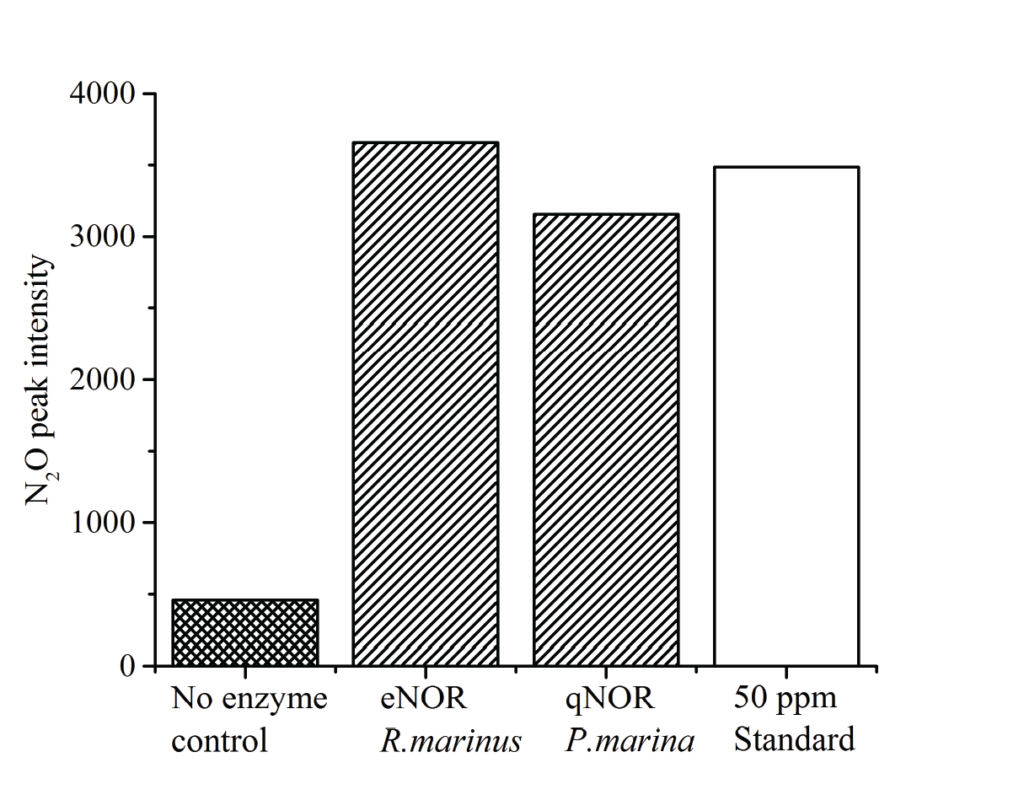
Fig caption: eNOR reduced NO to N2O. Activity was measured with a GC/MS, coupled with electron capture detector (ECD).
ii) Investigating the distribution and activity of denitrification across different environments (hot springs in northern Nevada, hyper-saline cold springs in the Arctic and oxygen minimum zones) using metagenomics and enrichment cultures to understand the diversification of denitrification as a function of temperature, pH and salinity.
2. Biochemical characterization of novel enzymes in aerobic respiration
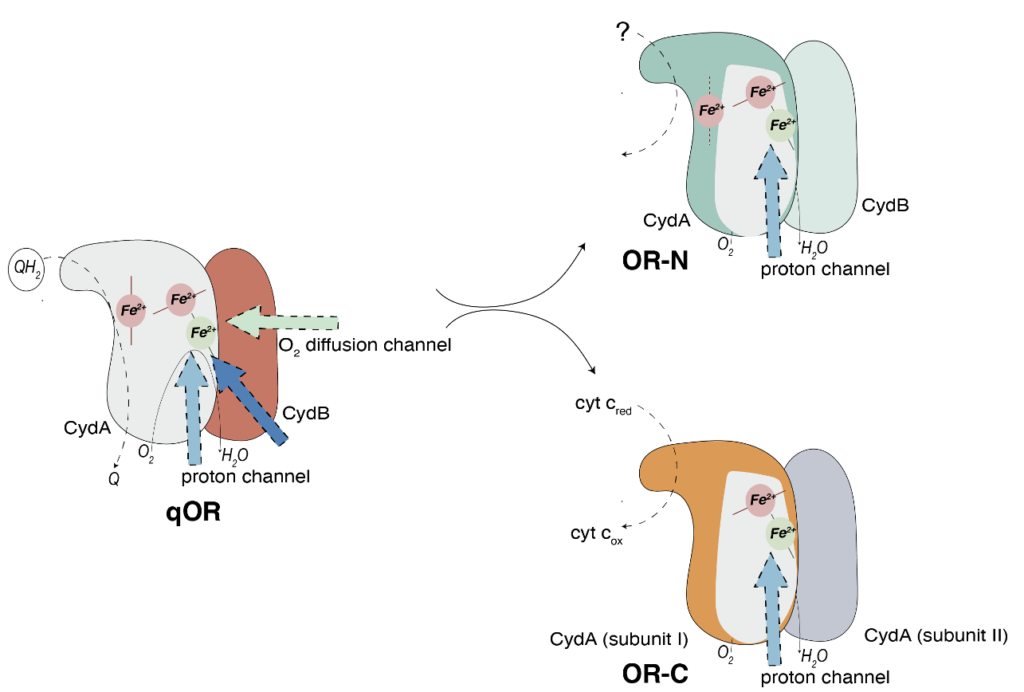
Fig caption: While canonical cytbd couple quinol oxidation to oxygen reduction, novel cytbd appear to use alternate electron donors. (Murali, Gennis, Hemp, ISME (2021))
Aside from the HCO superfamily, the cytochrome bd (cytbd) oxygen reductase superfamily is the other widely distributed terminal oxygen reductase that found in bacteria and archaea. Our recent work showed that this enzyme evolves by extensive gene duplication and diversification, and with substitution of the electron donating substrates. While the canonical cytbd from Escherichia coli is a quinol oxidizing oxygen reductase, we demonstrate that the novel cytbd enzymes from the OR-C and OR-N families likely use other electron donors and play a role in novel aerobic chemolithotrophic pathways. Our lab is currently working on the heterologous expression of novel enzymes within the cytbd superfamily.
3. Understanding biological dark oxygen production
Light-independent dark oxygen production has been observed in perchlorate reducing microorganisms, during nitrite-driven anaerobic methane oxidation, through water radiolysis and electrolysis. NO dismutation by nitric oxide dismutase (NOD) within the HCO superfamily has been proposed but its activity has not been verified. Additionally, DOP appears to be prevalent in far more environments than has been demonstrated. With field samples collected from hypersaline springs, deep mines, hydrothermal vents and freshwater lakes we hope to use metagenomics and metaproteomics, to identify more environments and more organisms within those environments that are capable of DOP. With enrichment cultures and biochemical characterization of the enzymes involved, we hope to gain a better understanding of the environmental and physiological context for DOP.
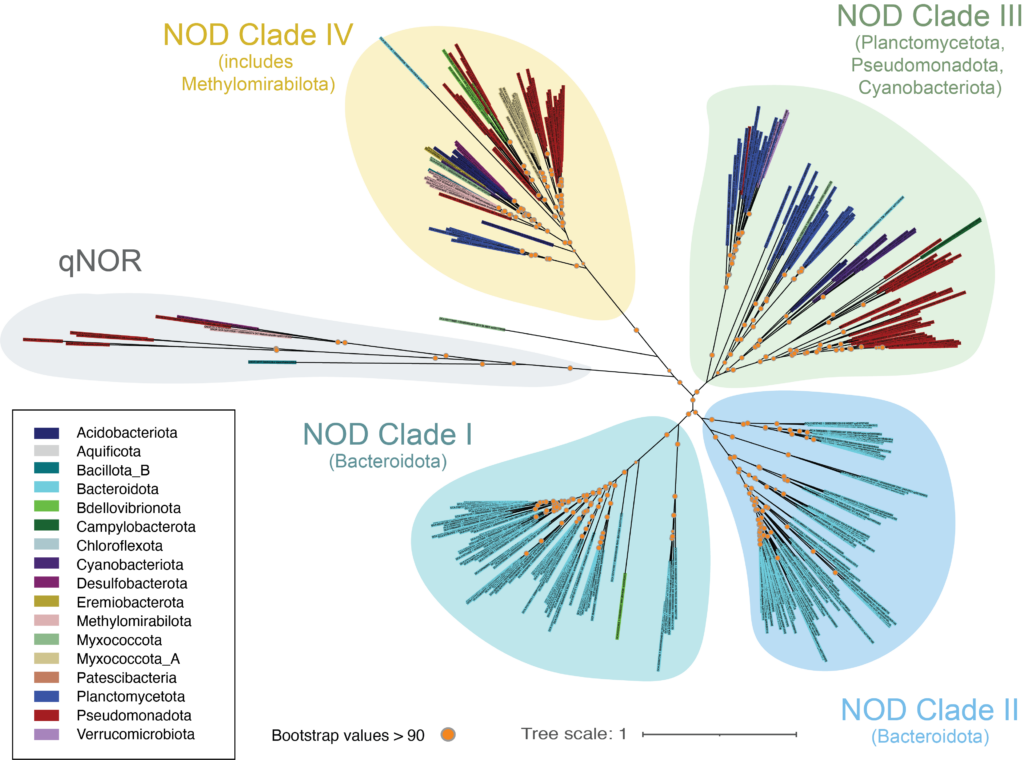
Fig caption: Despite the fact that more than half of NO dismutase containing microorganisms belong to the phylum Bacteroidota, no oxygen producing bacterium from this phylum has been isolated. Ruff et al. FEMS Microbiology and Ecology (2024)
4. Investigating the evolutionary history of host-adaptation in bacteria
Our research examines how microorganisms adapt to different microenvironments within the human host, such as the nasal, oral, skin, and gastrointestinal tracts. These environments offer more stable, nutrient-rich conditions than free-living settings, requiring microbes to develop unique adaptations. In particular, we are interested in how the respiratory pathways of microorganisms adapted to host microenvironments are different from free-living microorganisms. For instance, with comparative genomics we can show that certain microbial genera in the oxygen-variable oral cavity are more likely to utilize oxygen and nitrate as electron acceptors and possess branched respiratory pathways with multiple oxygen reductases. In contrast, microorganisms found within the human gut, even those that live close to the epithelial layer, such as Bacteroides fragilis either have no respiratory enzymes or a linear respiratory pathway. Such adaptations are essential for managing the oxygen levels encountered within different host tissues.
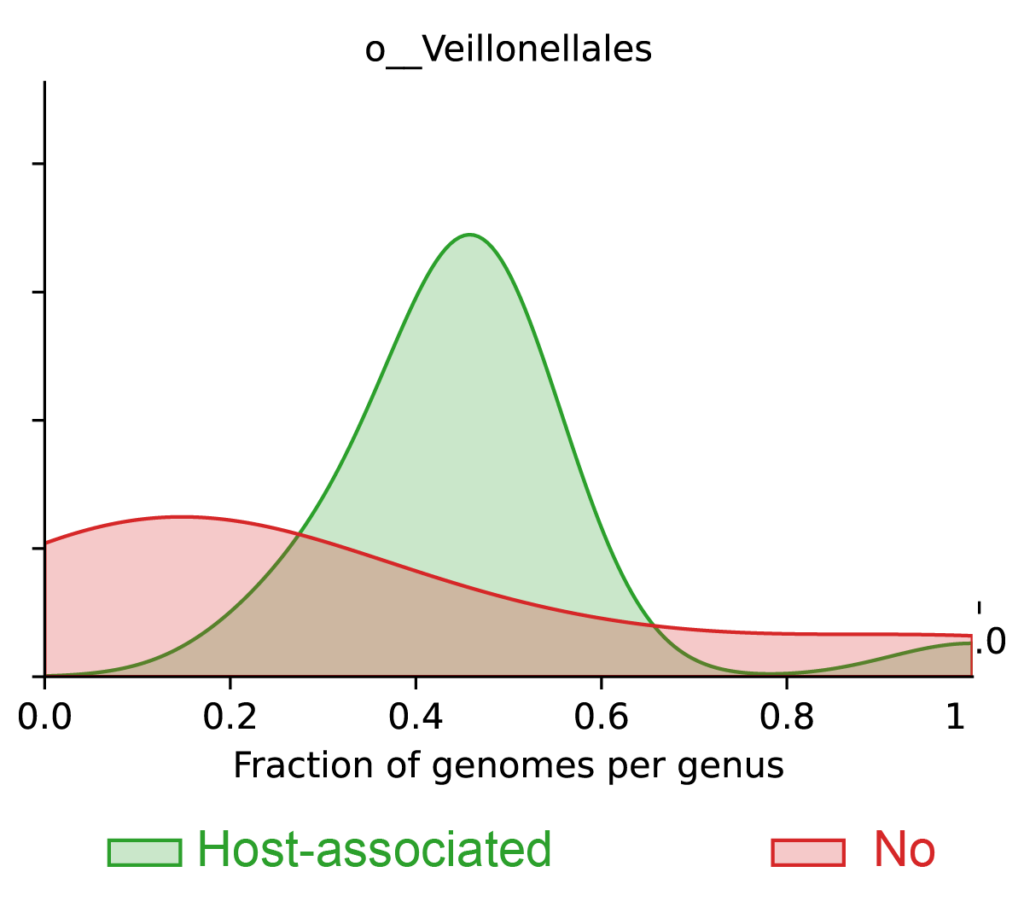
Fig caption: A density plot of the fraction of host-associated species within the order Veillonellales shows that a majority of species within this order were host-associated.
5. Mechanistic characterization of the cytochromes involved in direct interspecies electron transfer during anaerobic methane oxidation.
Our research investigates the molecular mechanisms of direct interspecies electron transfer (DIET) that drives the obligate syntrophic partnership between anaerobic methanotrophic archaea (ANME) and sulfate-reducing bacteria (SRB). This syntrophic partnership is critical to global methane cycling, responsible for consuming 80% of the methane produced in the world’s oceans. Because ANME and SRB cannot be cultured in a lab, we use heterologous expression in E. coli to study the cytochromes c involved in DIET. By characterizing their redox potentials and testing the function of cytochromes c, we aim to uncover how these microbes have evolved their redox proteins to drive a unique syntrophic partnership.
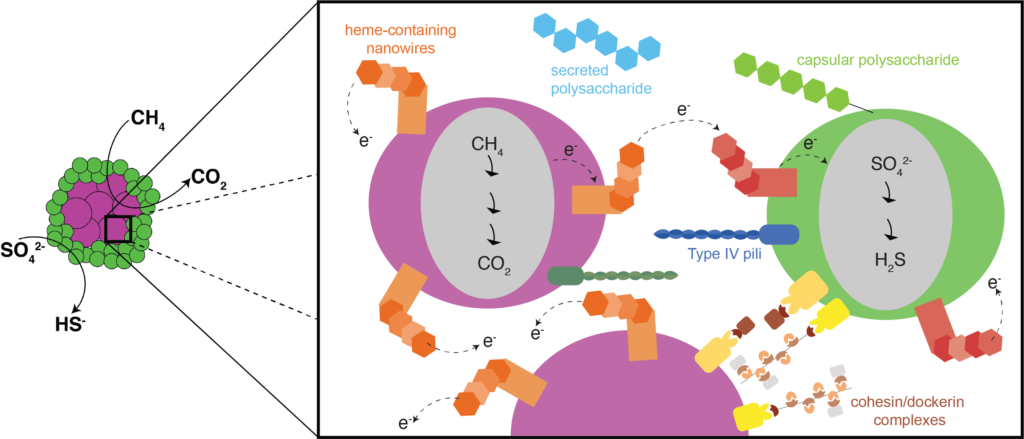
Fig caption: ANME and SRB co-exist in a conductive biofilm through which electrons released during methane oxidation are shared with SRB to drive sulfate reduction. Multi-heme cytochromes c appear to be essential for this process. (For further details, refer to Murali et al. PLOS Biology (2023)
